Published on June 24, 2026
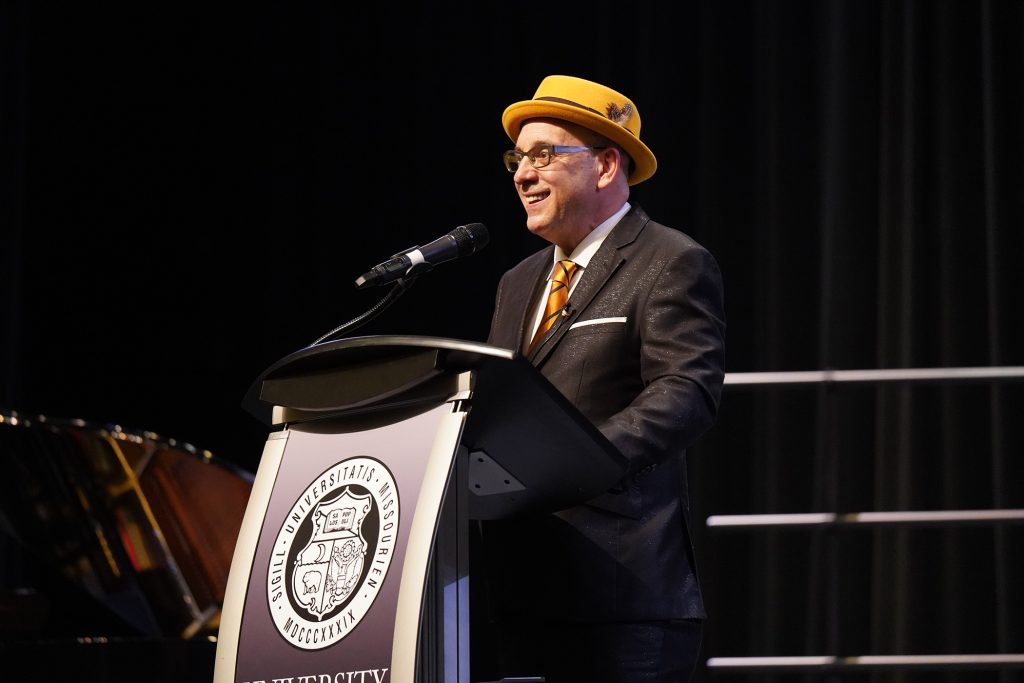
Story and photos by Logan Jackson
Long before Cal Fussman sat down with Muhammad Ali, Mikhail Gorbachev, Robert De Niro and hundreds of other influential figures, he was a teenager whose high school teacher saw incredible potential in his curious nature.
That teacher, Dorothy Traeger, encouraged a 16-year-old Fussman to attend a conference for aspiring journalists at Columbia University in New York. While the recommendation seemed simple at the time, Fussman understands the importance of that gesture.
“Mrs. Traeger did not have to recommend me for the conference,” he said. “But her willingness to present the opportunity to me truly did alter the course of my life.”
At the conference, Fussman listened to New York Times sportswriter Neil Amdur, a graduate of the Missouri School of Journalism, describe his experiences covering the 1972 Olympics. Afterward, Fussman approached him with a question.
“From a young age, I knew I wanted to interview the people who I found interesting,” Fussman said. “At that time, my dream was to be a sports columnist for a newspaper. I remember going up to Mr. Amdur and explaining that I really wanted a career as a sportswriter and asking where I should go to college. He had a simple response – ‘Missouri. Where else?’”
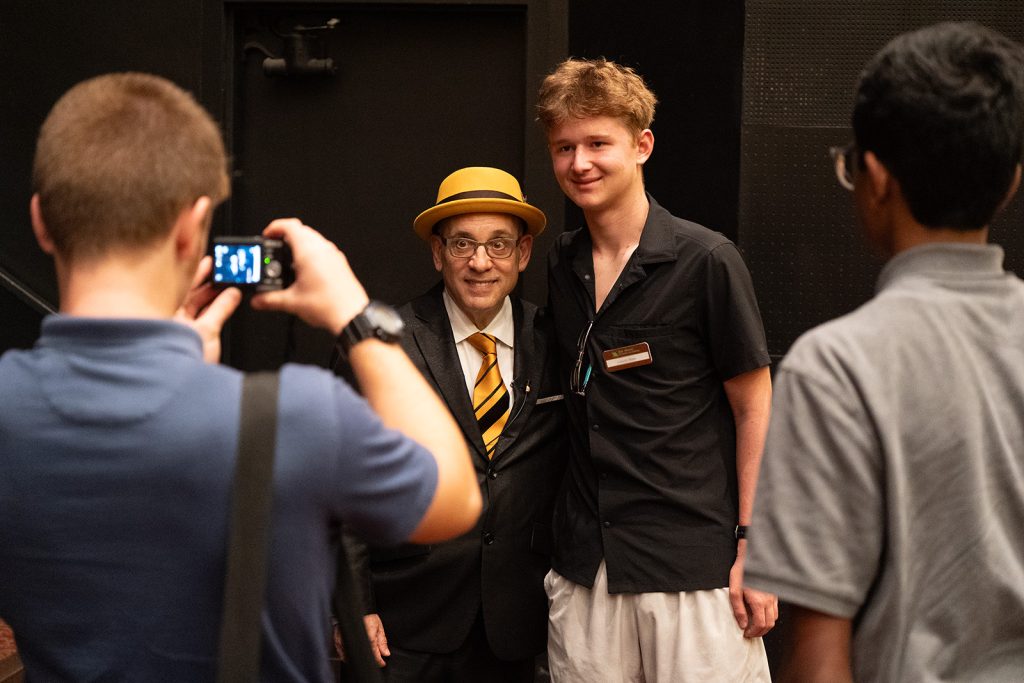
That was all the convincing Fussman needed. While he did apply to a few other universities, Mizzou was always his top choice.
“I knew I was going to Missouri,” Fussman said. “They just had to let me in.”
Arriving at Mizzou proved to be pivotal. As a Tiger, he built the journalistic foundation that launched his career.
Yet Fussman traces much of that journey back even further. Before Traeger’s encouragement, before Amdur’s advice and long before he interviewed world leaders, athletes and entertainers, he was simply a child who was unafraid to ask questions.
After President John F. Kennedy was assassinated, Fussman, who was in the second grade, wrote a letter to President Lyndon B. Johnson asking him how it felt to become president. Six months later, Fussman received a reply.
“I found the great thing about curiosity is it gives you confidence without you even knowing it,” Fussman said. “You just want to know something, so you step forward and ask the question. I never felt like I was being brave; I really just wanted to know the answer to my question.”
Around the time Fussman was penning a letter to the White House, he was also developing an interest in boxing, specifically Cassius Clay, who quickly became Fussman’s favorite fighter. After watching Clay become the world heavyweight champion by beating Sonny Liston, Fussman heard that Clay changed his name to Muhammad Ali.
“I remember going to my father and asking, ‘Are you allowed to change your name?’” Fussman said. “It was a very simple question from a place of pure childhood curiosity.”
Decades later, that same instinct would place him face-to-face with Ali himself. At the time, however, Fussman was simply developing the trait that would define his life. That curiosity flourished through the Missouri School of Journalism, where he worked at both the Maneater and the Columbia Missourian.
While serving as the lead writer for the Tiger football team during his senior year, Fussman experienced a moment that would shape his storytelling style. Mizzou had a freshman quarterback, Phil Bradley, who struggled a bit during a game against Kansas. Fussman shared some commentary about the game the next day.
“I wrote in the Missourian that he couldn’t have seen his receivers if he was watching the game from the Goodyear Blimp,” Fussman said. “Later on, I thought about what it would be like to be Phil Bradley and pick up the newspaper the day after the game and read that about himself. He was only a freshman; if you read some of my stories during my freshman year, they were really terrible. This was also an individual who became an outstanding quarterback and even made an all-star team in Major League Baseball. He was just spectacular. That moment taught me to better understand the people I was writing about and pushed me toward interviewing people to find out what they’ve learned through their experiences instead of creating a commentary about how I viewed their experiences.”
The lesson stayed with him. Rather than judging people from the press box, Fussman became increasingly interested in understanding them through conversation.
After stints with nationally recognized publications, Fussman found himself at Inside Sports magazine. While the magazine allowed him to continue interviewing professional athletes, it folded after a few years. Fussman found himself at a crossroads.
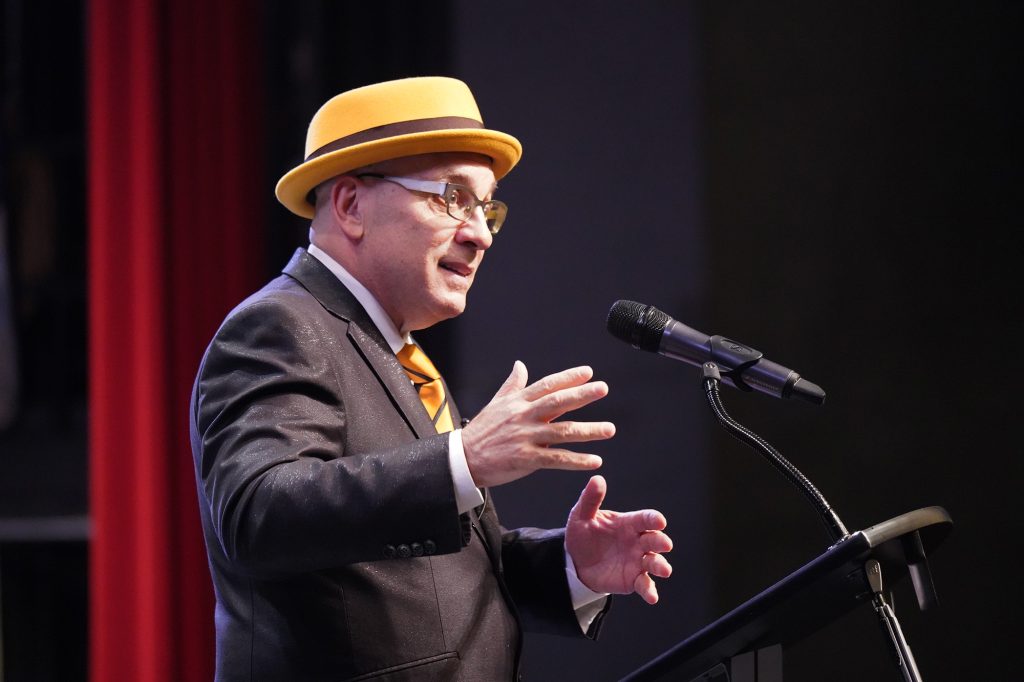
“I didn’t really know what I was going to do because I felt like I’d been able to interview all the people who I wanted to talk with,” Fussman said. “I decided to start traveling around the world. I would get on trains and buses and look for an open seat. I would try to start a conversation with the person I was sitting by with the hope they would maybe feed me or give me a place to sleep. That trip lasted 10 years.”
That international experience taught him something invaluable: how to build trust quickly. Years later, when he sat down with famous figures, he approached them the same way he approached strangers on buses halfway around the world.
When Fussman eventually returned to the United States, those lessons followed him. As a writer-at-large for Esquire, he interviewed some of the world’s most recognizable figures for the magazine’s “What I’ve Learned” column.
One of the most memorable conversations brought him back to the childhood hero who had sparked his curiosity decades earlier.
Years after Muhammad Ali had been diagnosed with Parkinson’s disease, Fussman spent a week with the boxing legend. By then, Ali often spoke only in a whisper, but his mind was still strong.
“I wanted to see and understand what was still deep down in his well,” Fussman said. “As a boxer, he always had that fire and the ability to dig down into his well to pull out something majestic.”
One morning, while standing in Ali’s gym, Fussman grabbed a pair of boxing gloves. He slid a pair of gloves onto Ali’s hands and put the other pair on his own. Fussman then began to hit the heavy bag, imitating Ali’s archrival Joe Frazier.
“I saw his eyes light up like a sleeping lion awakened by an old familiar scent,” Fussman said. “He started hitting the bag, and soon we were going back and forth. He was dancing around and was looking at himself in the mirrors. His head was up. He was a different person. I had brought something to him that day that lifted him up. I wasn’t knocking him down like I did with Phil Bradley all those years ago. I took Ali to a place he didn’t expect.”
His time with Ali carried special significance. The kid who once wondered why Cassius Clay had changed his name was now helping Muhammad Ali reconnect with a part of himself that illness had not erased.
Moments like that didn’t happen by accident. They were the product of lessons Fussman had been collecting since childhood — lessons refined in newsrooms, on buses halfway around the world and through thousands of conversations.
“There was nothing intimidating for me about meeting these individuals,” Fussman said. “I treated every conversation like I was just getting on that bus looking for someone to talk with. That was combined with doing all types of research and channeling my childhood curiosity. I would write out hundreds of questions and walk around with them for days, not memorizing them but kind of inhaling all the information I could. I would then rip those questions up and walk into the interview with no writing pad. I would put my recorder down in a place where I would almost forget about it. I would sit down and just connect with whoever I was interviewing like I connected with strangers who spoke a completely different language.”
Fussman brought that approach to conversations with many others, including basketball Hall of Famer Kobe Bryant, Academy Award winner Leonardo DiCaprio and broadcasting legend Larry King.
Today, Fussman applies the same skill that guided him through interviews, conversations and chance encounters around the world: asking thoughtful questions. Increasingly, those questions help organizations navigate the rapidly evolving world of artificial intelligence. He said it’s an interesting place to be considering he actively avoided incorporating social media into his daily life for the longest time.
“It got to the point where I didn’t even know how to call an Uber,” Fussman said. “I was against overusing social media and moving quickly on your phone. I had people joke about me having a Wikipedia page but not being able to call an Uber; it didn’t make sense to them. I was just that old school guy, but when AI came out it literally flipped everything upside down. Asking the best questions suddenly became even more important.”
For Fussman, the technology may be new, but the principle remains unchanged. The best answers still begin with the best questions.
It is a lesson rooted in the experiences that shaped his own life: a childhood spent asking questions, an education at the Missouri School of Journalism and a teacher who recognized the potential in a curious teenager.
Decades after Dorothy Traeger encouraged him to attend a journalism conference that changed his future, Fussman continues to share the same message with students and audiences around the world. One thoughtful question — and one teacher willing to encourage it — can alter the course of a life.